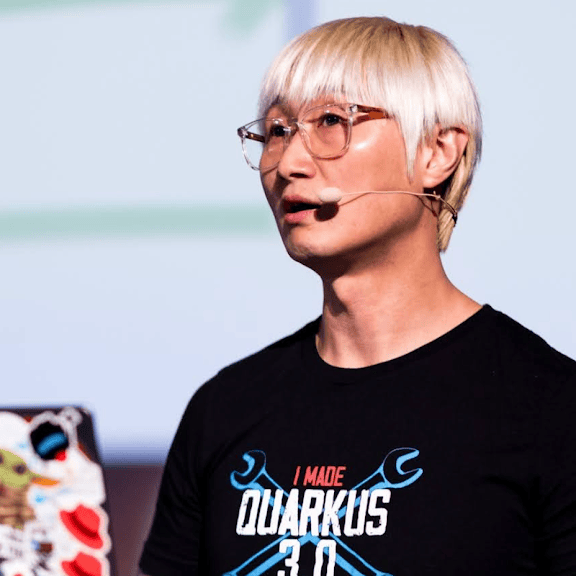
Anthony Dahanne
HeroDevs


学习、联系、构建
准备好开始使用 AI 和最新技术了吗? Microsoft Reactor 提供活动、培训和社区资源,帮助开发人员、企业家和初创公司利用 AI 技术等。 快加入我们吧!
学习、联系、构建
准备好开始使用 AI 和最新技术了吗? Microsoft Reactor 提供活动、培训和社区资源,帮助开发人员、企业家和初创公司利用 AI 技术等。 快加入我们吧!
8 四月, 2026 | 3:30 下午 - 7:30 下午 (UTC) 协调世界时
 直播
直播主题: 编码、语言和框架
语言: 英语
Join us at Microsoft JDConf 2026, a global virtual Java Developer Conference on April 8-9. This year’s JDConf focuses on empowering Java developers to build and scale modern, intelligent, and cloud-native applications. With the rise of large language models (LLMs), agent-oriented architectures, and AI-driven development, JDConf 2026 will showcase how Java remains central to enterprise innovation.
We’ll cover key topics such as:
## 🌎 Americas Stream
Program order to come; please check jdconf.com for the latest details
1. Building the Agentic Future Together — Keynote
Speakers: Rod Johnson (Embabel), Bruno Borges (Microsoft), Ayan Gupta (Microsoft)
Software has entered a new era where intelligence is open, AI agents collaborate with people and among other agents, while developers remain in control. Join this keynote to see how software development teams move from traditional tooling to agentic workflows, modernize millions of existing applications, and safely integrate AI using open frameworks. See how GitHub Copilot agents, Microsoft Foundry, and the Java ecosystem work together to deliver governed, production‑grade AI capabilities while reinforcing the value of open source, existing systems, and developer choice in the enterprise.
2. Secrets of Agentic Memory Management
Speaker: Brian Sam-Bodden (Redis)
Memory is what gives agents continuity, personalization, and depth—but managing it is far from simple. This talk explores current best practices in agentic memory, from short-term working memory with summarization to long-term stores with semantic retrieval and metadata filters. We'll cover how modern systems handle promotion, deduplication, and background consolidation, as well as how protocols like MCP expose memory as first-class tools. We'll illustrate design trade-offs and practical strategies for building memory-aware agents in Java.
3. Modernizing a Java App, with Node Frontend, with GitHub Copilot
Speakers: Ed Burns (Microsoft)
Legacy applications rarely live in isolation. Many real-world systems combine technologies like Node.js and Java—and over time, outdated dependencies and runtimes become a major barrier to security, performance, and innovation.
In this session, we'll take a typical enterprise Java app with a Node.js front end that hasn't been updated in years and modernize it end-to-end using GitHub Copilot App Modernization. We'll start by upgrading ill-maintained Node.js dependencies, addressing breaking changes and security issues along the way. Then we'll turn to the backend Java service, upgrading it from an older Java version to a modern, supported JDK, resolving compatibility issues and improving maintainability.
4. Building Scalable Multi-Agentic AI Systems in Java: Orchestrating Agents with Event-Driven Approach
Speaker: Mary Grygleski (Java Champion)
This talk will guide Java developers through the design and implementation of multi-agent generative AI systems using event-driven principles. Attendees will learn how autonomous GenAI agents collaborate, communicate, and adapt in real-time workflows using modern Java frameworks and messaging protocols.
Cover core patterns such as pub/sub, orchestrator, and supervisor for managing agent communication, memory, and workflow state. Discuss interoperability with MCP (Model Context Protocol) and how Java event streaming tools like Kafka, Pulsar, and Spring Messaging facilitate high throughput and reliability.
5. From Cloud Native to AI Native: Harnessing Quarkus, MCP, and Azure OpenAI
Speaker: Daniel Oh (IBM)
Modern Java applications demand speed, scale, and intelligence. Join us as we explore how Quarkus helps developers build AI-native microservices that seamlessly connect with enterprise systems through the Model Context Protocol (MCP). We'll demonstrate how Azure MCP servers provide a secure operational bridge between AI and application data, while Azure OpenAI delivers powerful model intelligence directly into your workflows.
This session features a hands-on technical deep dive and a live demo, showing the complete journey from code to a production-ready, AI-enhanced service running on Azure.
6. Building LLM Apps in Java with LangChain4j
Speaker: Bazlur Rahman (Hammerspace)
AI is revolutionizing the software landscape. However, for many Java developers, integrating these powerful AI tools into existing enterprise applications can feel daunting. This hands-on session will demystify the process and show you how to build LLM-powered features directly into your Java codebase.
Using Java and the LangChain4j library, we'll explore RAG, a cutting-edge technique that combines the vast knowledge of LLMs with the precision of your own data. We'll explore how to create both few-shot and zero-shot RAG models and then add practical features like summarization and similarity search, backed by an embedding database.
Through a live coding demo, we'll walk through constructing an AI-powered online store backend and provide practical insights into the architecture and code.
7. Intelligent Java Tooling: How AI Is Changing Build, Test, and Deployment Pipelines
Speaker: Savi Grover (NBC Universal)
AI is transforming the Java software lifecycle—from how we build code, generate tests, and detect failures, to how we deploy and monitor services in production. This talk explores how AI-assisted tools are reshaping the Java ecosystem: predictive builds, autonomous test generation, self-healing functional tests, AI-guided deployment decisions, and intelligent anomaly detection powered by observability signals. Attendees will learn modern patterns, tools, and real-world use cases illustrating how Java teams can integrate these capabilities into their CI/CD pipelines to improve velocity, reliability, and responsible automation across the SDLC.
8. From Vulnerability to Victory: Mastering the CVE Lifecycle for Java Developers
Speaker: Anthony Dahanne (HeroDevs)
This session demystifies the CVE lifecycle for Java developers. We'll explore how vulnerabilities are discovered, scored via CVSS, and disclosed through responsible processes. You'll learn about major vulnerability databases (NVD, GitHub Advisory, OSS Index), their differences, and which security tools rely on each source.
The practical half equips you with remediation strategies using automated tools like Dependabot, Renovate, and IDE integrations. We'll tackle the challenge of transitive dependencies in Maven and Gradle with hands-on techniques for resolving conflicts. Finally, we'll discuss framework (Spring, Quarkus, etc.) End-of-Life situations with the different options available.
Walk away understanding the entire vulnerability ecosystem, implementing automated dependency updates in CI/CD pipelines, handling dependency conflict resolution, and developing pragmatic approaches to framework EOL scenarios.
## 🚀 Join the JDConf Experience and Earn Microsoft Rewards! 🚀
Are you ready for an engaging and enriching developer conference? We are thrilled to offer Microsoft Rewards points to participants who register or attend the JDConf!
Details of the Offer:
Registration Rewards: Participants who register for one of the JDConf 2026 – America, Europe or Asia – will receive 1000 Microsoft Rewards points.
Attendance Rewards: The first 300 attendees to check-in live for one of the JDConf - America, Europe or Asia - will receive 5000 Microsoft Rewards points.
How to Participate:
Registration Rewards:
Attendance Rewards: For your check-in to be counted you will need to do one of the following on the day of the event:
Points Distribution:
Microsoft Rewards points will be added to the participants' Microsoft accounts within 60 days following the event. To earn points, you must use an email that is associated with a Microsoft account. You will receive an e-mail from the Microsoft Reactor team if you are eligible and earn the Microsoft Rewards.
Points can be used towards many different rewards, check out Microsoft Rewards to see what rewards are available in your region.
Disclaimer: Points will be applied upon registration and attendance and will not be counted multiple times for registering or attending at different events. Up to 10,000 developers who register for JDConf will be rewarded with Microsoft Rewards points.
Terms | Privacy
主讲人
Anthony Dahanne
HeroDevs
Ayan Gupta
Microsoft
Bazlur Rahman
Hammerspace
Brian Sam-Bodden
Redis
Bruno Borges
Microsoft
Daniel Oh
IBM
Ed Burns
Microsoft
Mary Grygleski
AI Collective
Rod Johnson
VMWare
Savi Grover
NBC
已注册并且需要取消? 取消注册
此活动属于 Microsoft JDConf 2026 Series.
单击此处 访问“系列”页 可在此处查看所有即将举办的活动和点播活动。